



So… you’ve completed the TMB. What’s next?
You’ve circled Mont Blanc. Climbed the cols. Earned your café stops.
And somewhere along the way, the question likely crept in: what next?
Because finishing the Tour du Mont Blanc isn’t the end-it’s usually the beginning. Once you’ve experienced that rhythm of hut-to-hut walking, big mountain passes, and ever-changing landscapes, it’s hard not to want more.
The good news? Europe is full of trails that build on that same magic, whether you’re looking for something tougher, quieter, or simply different.
Here’s where to go next...

For Big Mountain Drama & Iconic Scenery
Dolomites Hiking Tours
Famous for their jagged limestone peaks, sunlit valleys, and welcoming rifugios, the Dolomites offer some of the most visually striking hiking in Europe.
Compared to the TMB:
- Difficulty: Similar or slightly easier, depending on the route
- Terrain: More rocky and dramatic, with less grassy pastureland
- Scenery: More “wow-factor” peaks; less glacier dominance than Mont Blanc
- Best time to hike: June-September (similar season, but snow can linger longer)
- Popularity: Busy in peak months, but trails often feel less crowded than the TMB
If you loved the views on the TMB, this is your natural next step-with better food along the way.
Check out our Dolomites hiking tours >

Alta Via 1 Routes
For hikers craving a more rugged, high-alpine feel, Italy’s Alta Via trails deliver remote scenery and a true mountain immersion.
Compared to the TMB:
- Difficulty: More challenging
- Terrain: Narrower trails, exposed sections, and higher routes
- Scenery: Wild, vertical landscapes with dramatic rock formations
- Best time to hike: July-September
- Popularity: Much quieter and more remote
Read our Alta Via 1 vs. TMB comparison guide for a deeper dive.
Check out our Alta Via 1 hiking trips >

High Trails to the Matterhorn
A dramatic route linking Mont Blanc to the Matterhorn, combining Alpine villages, lofty viewpoints, and two of Europe’s most famous mountains.
Compared to the TMB:
- Difficulty: Slightly more challenging overall
- Terrain: Similar high mountain passes, but often longer days
- Scenery: Even more iconic peaks, with constant Matterhorn views
- Best time to hike: July-September
- Popularity: Less crowded than the TMB but still well-known
Think of this as the TMB’s more ambitious sibling.
Check out our Matterhorn hiking trips >

For a More Rugged, High-Alpine Challenge
Walker’s Haute Route
A legendary high-alpine trek from Chamonix to Zermatt, crossing dramatic mountain passes with constant glacier views.
Compared to the TMB:
- Difficulty: Significantly more challenging
- Terrain: Higher, more remote, with tougher ascents and descents
- Scenery: More glaciers, fewer green valleys
- Best time to hike: Mid-July to September
- Popularity: Popular, but less crowded due to the difficulty
If the TMB felt like a challenge, this is the next level.
Check out our Walker's Haute Route hiking trips >

E5 Alpine Crossing
A classic north-to-south crossing of the Alps, starting in Germany and finishing in Italy.
Compared to the TMB:
- Difficulty: Similar, with a few more demanding stages
- Terrain: Huge variety, from forest trails to high alpine passes
- Scenery: Constantly changing landscapes rather than one massif
- Best time to hike: June-September
- Popularity: Well-known but generally quieter
A great choice if you want that same sense of achievement, with more variety.
Check out our E5 Alpine Crossing hiking trips >

For Long-Distance Adventure & Variety
Via Alpina
A transnational Alpine route weaving through multiple countries.
Compared to the TMB:
- Difficulty: Varies widely depending on the section
-
- Via Alpina East: Generally more moderate, with well-paced stages through Austria’s Tyrol region-ideal if you want a multi-day Alpine experience without the sustained intensity of the TMB.
- Via Alpina West: More challenging overall, with higher passes and longer days through Switzerland, closer in feel to the TMB, but typically quieter and more remote.
- Terrain: Extremely varied, high alpine, valleys, and villages
- Scenery: Less concentrated “drama,” more diversity
- Best time to hike: June-September
- Popularity: Much quieter and less commercial
Perfect if you loved the journey of the TMB more than the destination.
Check out our Via Alpina hiking trips >

GR5 (French Alps)
One of Europe’s great long-distance trails through the French Alps.
Compared to the TMB:
- Difficulty: Similar, but more flexible in sections
- Terrain: Well-marked paths with steady ascents
- Scenery: Classic Alpine views, less concentrated than Mont Blanc
- Best time to hike: June-September
- Popularity: Less crowded, more spread out
It offers the same rhythm as the TMB, just with fewer people.
Check out our GR5 hiking itinerary >
For Classic Alpine Walking (With a Twist)

French Alps Walking Tours
From iconic passes to quieter valleys, these routes deliver classic Alpine walking.
Compared to the TMB:
- Difficulty: Generally easier and more flexible
- Terrain: Mix of mountain paths and valley trails
- Scenery: Similar landscapes, but less intense
- Best time to hike: June-September
- Popularity: Much quieter
Ideal if you want to relive the TMB feeling at a gentler pace.
Check out our French Alps hiking itineraries >

Tyrolean Alps
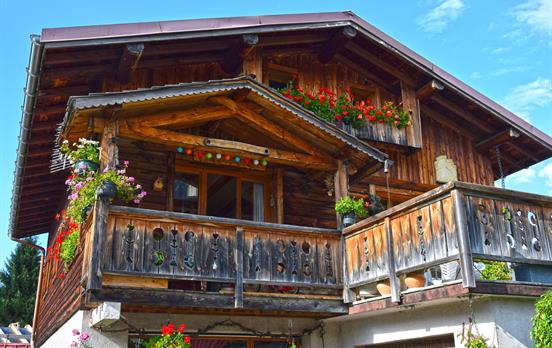
A blend of dramatic mountains, green valleys, and traditional Alpine culture.
Compared to the TMB:
- Difficulty: Similar or slightly easier
- Terrain: Well-maintained trails with fewer extreme ascents
- Scenery: More pastoral-alpine meadows and villages
- Best time to hike: June-September
- Popularity: Less international, more local feel
A great balance of scenery and culture.
Check out our Tyrolean Alps hiking itineraries >

Bavarian Alps
Gentler in feel but no less scenic, with lakes and forested trails.
Compared to the TMB:
- Difficulty: Easier
- Terrain: Lower altitude, less exposure
- Scenery: Lakes, forests, and rolling mountains rather than high peaks
- Best time to hike: May-October (longer season than TMB)
- Popularity: Popular locally, but not busy like the TMB
Perfect for a more relaxed follow-up adventure.
Check out our Bavarian Alps hiking itineraries >

Kitzbühel Alpine Trail
A rolling, panoramic trail through the Austrian Alps.
Compared to the TMB:
- Difficulty: Easier
- Terrain: Gentle ridgelines rather than steep passes
- Scenery: Wide, open views rather than dramatic peaks
- Best time to hike: June-September
- Popularity: Quiet and uncrowded
Ideal if you want big views without the intensity.
Check out our Kitzbühel Alpine hiking itinerary >

Julian Alps
A quieter corner of the Alps, where emerald lakes, limestone peaks, and traditional mountain culture come together. The Julian Alps offer a balance of high trails and gentler valley walking, with a distinctly off-the-radar feel.
Compared to the TMB:
- Difficulty: Similar or slightly easier (depending on route choice)
- Terrain: A mix of rocky alpine paths and softer valley trails, with fewer sustained high passes
- Scenery: Less glacial drama, more lakes, rivers, and forested valleys-think Lake Bled and turquoise alpine waters
- Best time to hike: June–September
- Popularity: Much quieter and less international than the TMB
A great choice if you want Alpine scenery with fewer crowds-and a slightly more relaxed, undiscovered feel.
Check out our High Trails of Julian Alps hiking itinerary >
For Something a Little Different

Via Francigena (Stage 1: Bourg-St-Pierre to St-Martin)
A historic pilgrimage route through the Alps.
Compared to the TMB:
- Difficulty: Moderate, generally easier
- Terrain: Mix of mountain trails and historic paths
- Scenery: Less dramatic, more cultural and historic
- Best time to hike: June-September
- Popularity: Much quieter and less commercial
A completely different experience, less about peaks, more about purpose.
Check out our Via Francigena hiking itineraries >
Where Will the Trail Take You Next?
The Tour du Mont Blanc sets a high bar, but it also opens the door to a lifetime of walking adventures.
Whether you’re chasing bigger mountains, quieter trails, or something entirely different, there’s always another path waiting.

Why Choose a Macs Adventure Self-Guided Hiking Trip?
Because your next adventure should feel just as seamless as your last one.
With Macs Adventure, you get:
- Expertly designed itineraries that build on your TMB experience
- Hand-picked accommodation full of character and comfort
- Luggage transfers, so you can walk light
- Turn-by-turn GPS navigation via our award-winning app
- 24/7 support, whenever you need it
All the freedom of independent travel, with none of the hassle.
You’ve done the TMB.
Now it’s time to decide: do you go higher, further… or simply somewhere new?
People Also Ask
- Guide to hiking the Tour du Mont Blanc
Everything you need to plan your TMB adventure, from route options and highlights to daily distances and logistics.
Read our full guide to hiking the Tour du Mont Blanc > - Weather conditions on the TMB
Expect changeable alpine weather-warm valley days, cooler mountain passes, and the occasional surprise shower.
Learn more about weather conditions on the TMB > - How fit do I need to be to hike the TMB?
A good level of fitness helps, as you’ll be walking 6–8 hours a day with regular ascents and descents.
Find out how fit you need to be for the TMB > - How to get to the start of the TMB
Most routes begin in Chamonix, which is easily reached via Geneva Airport and a straightforward transfer.
See our guide on how to get to the start of the TMB > - TMB packing list
Think light layers, waterproofs, sturdy boots, and a few hut essentials-packing smart makes all the difference.
Check out our full TMB packing list >
- What to eat and drink on the TMB
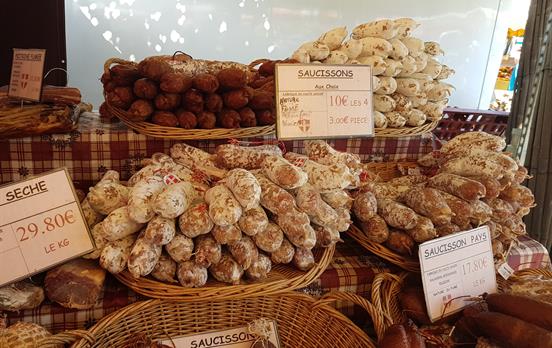
Refuel with hearty alpine meals, local cheeses, fresh bread, and the occasional well-earned beer or glass of wine.
Discover what to eat and drink on the TMB > - Top tips for walking the TMB
Start early, pace yourself, pack light, and don’t forget to look up-the views are kind of the point.
Read our top tips for walking the TMB > - TMB FAQs
Got questions? From luggage transfers to route variations, our FAQs cover the details that make planning easier.
Browse our full TMB FAQs > - TMB vs. Alta Via 1
Both offer spectacular alpine scenery, but the Alta Via 1 is quieter and more rugged, while the TMB is more social and well-established.
Compare the TMB vs. Alta Via 1 > - Mountain Hut guide – what’s it like to stay in a mountain hut?
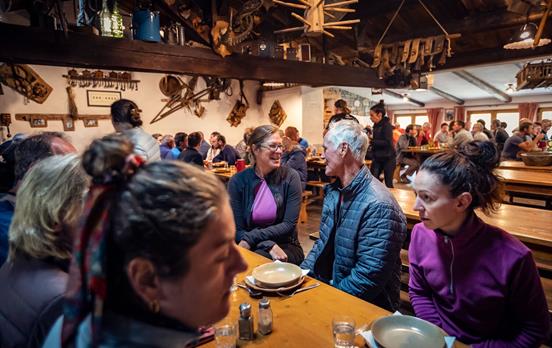
From shared dorms to communal dinners, here’s what to expect when staying in alpine mountain huts along the trail.
Read our full mountain hut guide >




















 Canada